What to carry with you
- Heat damage risk depends on temperature, time, repetition, tension, and hair condition.
- Use the lowest effective setting and limit passes.
- Heat protectants may reduce damage; they cannot make high heat consequence-free.
Overview
Safer heat styling balances thermal formatting benefits (smoothing, stretching) against the permanent alteration of hair keratin proteins. Using temperature-controlled tools below 350°F (177°C), applying silicon-based heat protectants, and maintaining adequate intervals between heat applications minimizes structural heat damage.
Heat is a tool with a cost curve
Blow dryers, diffusers, hot combs, and irons can create useful styles, stretch hair, and shorten drying time. They can also alter the fiber when exposure is too intense or repeated too often. Risk is not a simple yes-or-no category. Temperature, contact time, number of passes, tension, moisture level, prior damage, and frequency all shape the outcome.
This means both extremes are unhelpful: heat is not automatically forbidden, and a product labeled ‘protectant’ does not make any setting safe.
Prepare before the tool turns on
Begin with clean, conditioned, detangled hair. Product buildup can make results uneven and encourage repeated passes. Apply a heat-protectant product according to its directions. Work in sections so you can control airflow and avoid repeatedly heating the same area.
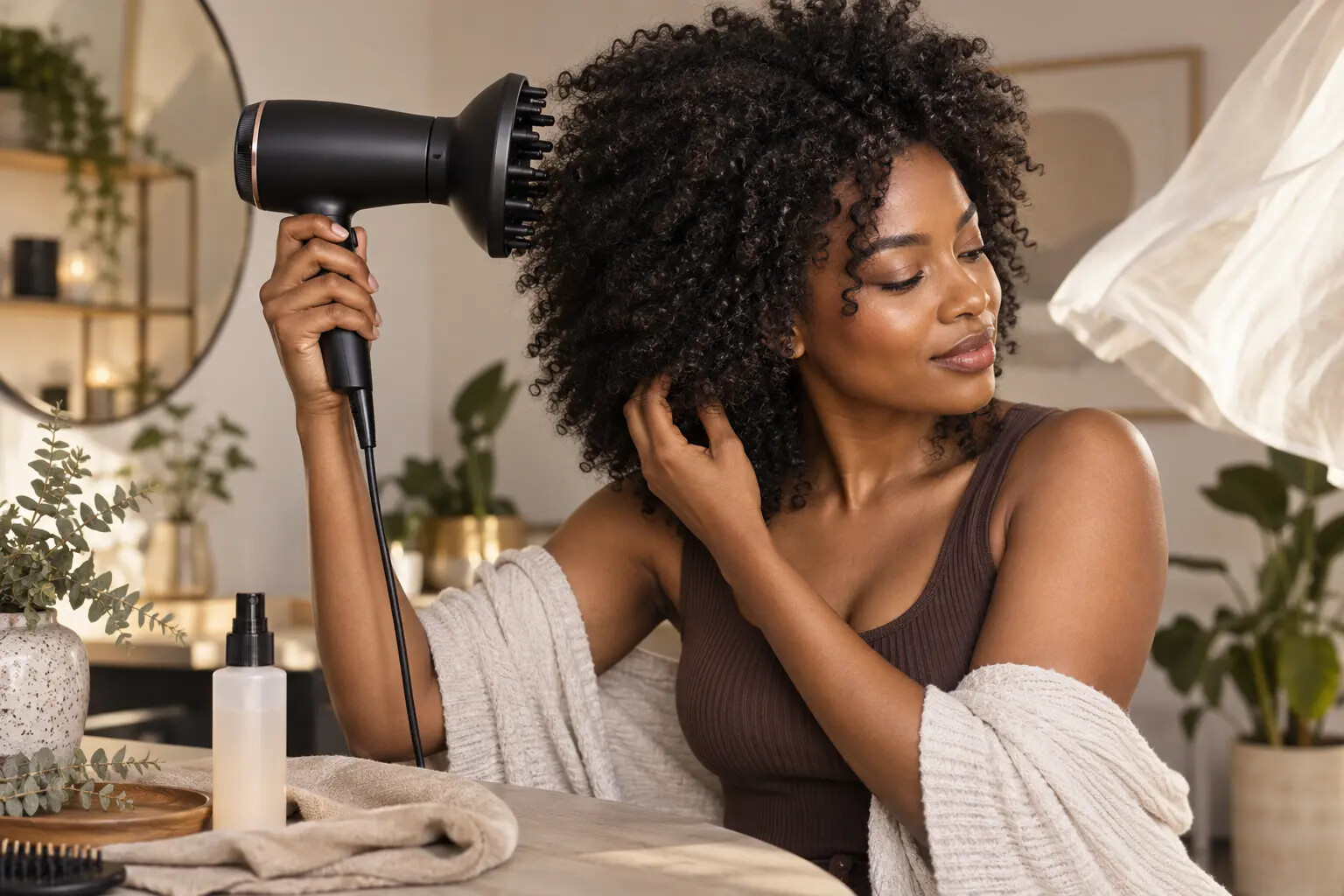
For blow-drying, keep the tool moving and use the lowest heat and airflow combination that produces the result you need. A nozzle or diffuser can improve control. Avoid pressing a hot tool against one point for a prolonged period.
Reduce passes, not just temperature
A moderate setting used over and over can still create substantial exposure. Detangle and organize the section first, then make deliberate passes. If the hair will not smooth at a conservative setting, consider accepting more texture rather than escalating indefinitely.
Space heat sessions when possible. The hair shaft does not biologically heal between sessions, so cumulative wear matters. Conditioning and trimming can improve feel and manageability, but they do not reverse structural damage.
Recognize when to pause
Persistent burnt odor, brittleness, breakage, unusually rough ends, or curls that no longer return after washing can signal damage. Stop and reassess rather than using more heat to disguise the change. A stylist or dermatologist can help when breakage or loss is severe or unexplained.
The safest heat routine is the one with a defined purpose, controlled exposure, and honest boundaries. Style should serve you—not require the hair to survive a test every week.
Frequently asked questions
At what temperature does heat damage occur on natural hair?
Keratin protein denaturation begins around 300°F–350°F (148°C–177°C). Temperatures exceeding 390°F (200°C) can cause irreversible thermal damage and curl pattern loss.
Do heat protectants completely prevent heat damage?
Heat protectants reduce heat transfer rate and shield the cuticle, but they do not make hair immune to damage. High temperatures or repeated passes will still degrade hair structure.
Can heat-damaged hair regain its natural curl pattern?
No. Once the protein bonds in the cortex are permanently broken by excessive heat, the fiber cannot recover its original elasticity. The damaged length must eventually be trimmed.
Sources & further reading
Sources support the educational statements in this guide. Product and routine choices remain individual.
American Academy of Dermatology: How to stop damaging your hair American Academy of Dermatology: Black hair—tips for everyday careThis guide is educational and cannot diagnose hair or scalp conditions. Seek professional care for sudden or patchy loss, pain, sores, severe scaling, or persistent symptoms.