What to carry with you
- Hair can grow at the scalp while breaking at the ends.
- Friction, tension, dryness, heat, and rough detangling can compound.
- A repeatable low-breakage routine is more useful than chasing miracle growth claims.
Overview
Hair growth occurs physiologically at the follicle, while length retention is a mechanical engineering challenge focused on preserving existing fiber strands against cuticle erosion, single-strand knots, friction, and tension breakage. Retaining length requires gentler detangling, reduced high-temperature heat exposure, protective night habits, and low-tension styling.
Growth and retention are different
New hair emerges from follicles, but the length you see also depends on what remains attached. When ends break at a pace close to new growth, progress can feel invisible. That is why a retention-first routine asks not only, ‘How do I grow hair?’ but also, ‘What repeatedly wears my existing hair down?’
No routine can prevent every broken strand. Hair is a fiber exposed to washing, weather, sleep, styling, and time. The aim is to reduce unnecessary stress so more of the length survives.
Look for patterns, not blame
Short pieces on clothing or around the sink, frequent single-strand knots, thin ends, and areas that receive repeated tension can suggest breakage. Shed hairs often have a small bulb at one end; broken pieces may not. This home observation is not a diagnosis, but it can guide gentler choices.
Common contributors include tight styles, forceful detangling, repeated high heat, overlapping chemical services, rough towels, dry handling, and friction during sleep. Several small stressors often combine.
Use the low-breakage sequence
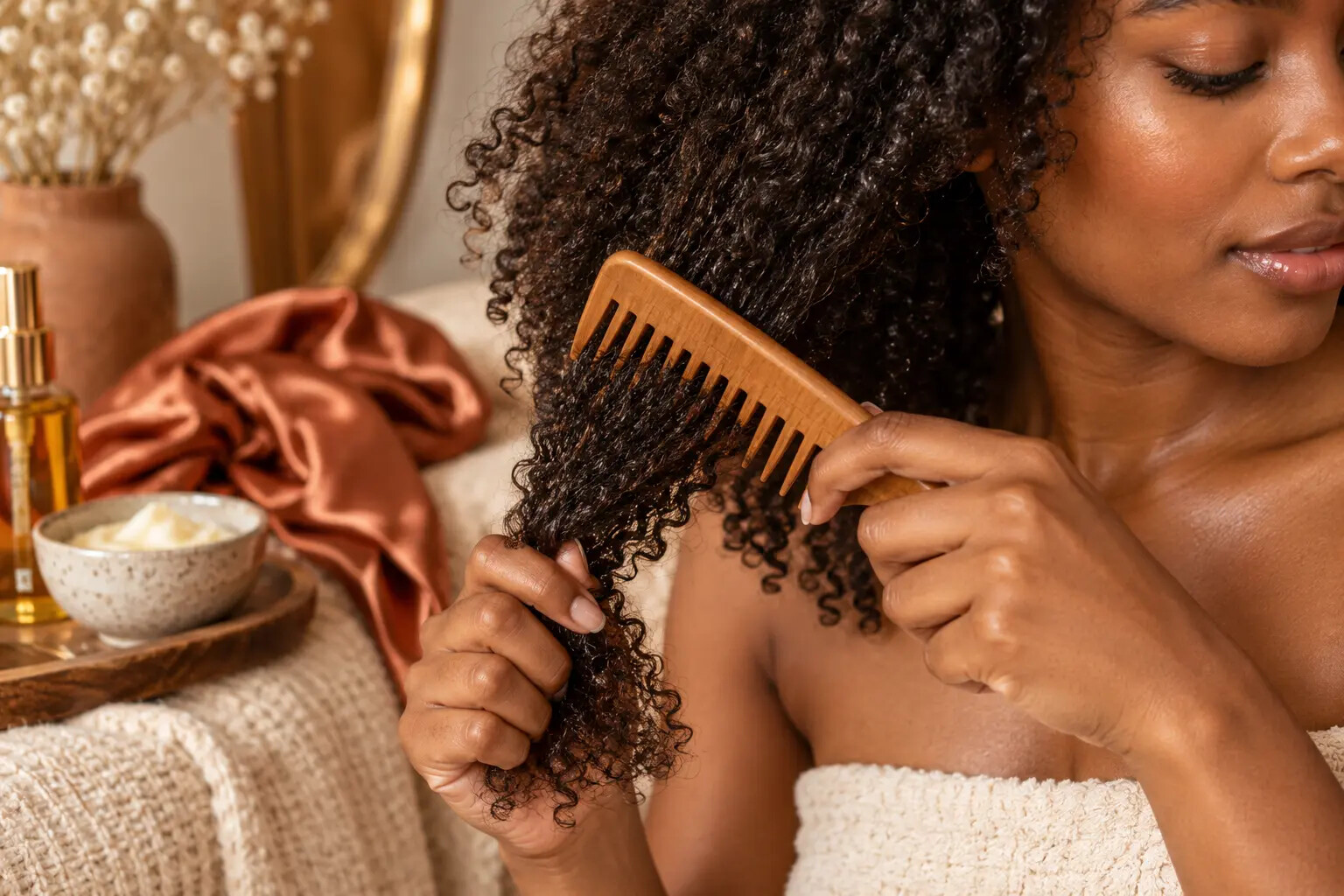
Work in manageable sections. Add water and a conditioner with slip. Use fingers or a wide-tooth comb, beginning near the ends and gradually moving upward. Stabilize the section above a knot so the force is not transferred directly to the scalp. If a tangle resists, add slip and patience rather than strength.
- Keep styles comfortable from installation through removal.
- Protect ends without hiding warning signs from the scalp.
- Trim damaged ends when they repeatedly catch and split.
- Change one source of stress at a time and track the result.
Measure what matters
Instead of checking length every day, track easier detangling, fewer snapped pieces, better end density, and a routine you can sustain. Take occasional photographs in similar lighting if you want a record. Avoid treating normal variation as failure.
The product promise to be skeptical of is certainty. Oils, supplements, and topical products cannot guarantee dramatic growth for every person. Retention improves when habits become gentler and consistent—and persistent thinning still belongs with a clinician.
Frequently asked questions
What is the difference between hair growth and length retention?
Hair growth is the rate at which follicles produce new length (typically 0.5 inches per month). Length retention is how much of that grown length stays intact without snapping off at the ends.
How can you tell the difference between shed hair and broken hair?
Shed hair has completed its natural telogen growth cycle and features a tiny white root bulb at one end. Broken hair is usually shorter, lacks a root bulb, and may show frayed split ends.
Do oils or supplements actually increase hair growth speed?
No topical oil or over-the-counter vitamin can override genetic growth rates. Supplements only help if you have a diagnosed medical deficiency, while proper handling helps retain existing length.
Sources & further reading
Sources support the educational statements in this guide. Product and routine choices remain individual.
American Academy of Dermatology: How to stop damaging your hair American Academy of Dermatology: Black hair—tips for everyday care MedlinePlus: Hair LossThis guide is educational and cannot diagnose hair or scalp conditions. Seek professional care for sudden or patchy loss, pain, sores, severe scaling, or persistent symptoms.