What to carry with you
- Pain is not proof that a style will last; it is a warning sign.
- A protective style must also protect the scalp and hairline.
- Removal is part of the style and deserves time, slip, and patience.
Overview
Protective styling reduces daily environmental exposure and mechanical handling of hair ends. However, true protection depends on avoiding excessive root tension, limiting heavy extensions, maintaining scalp hygiene access, and practicing patient, slip-assisted style removal.
Protection is a result, not a label
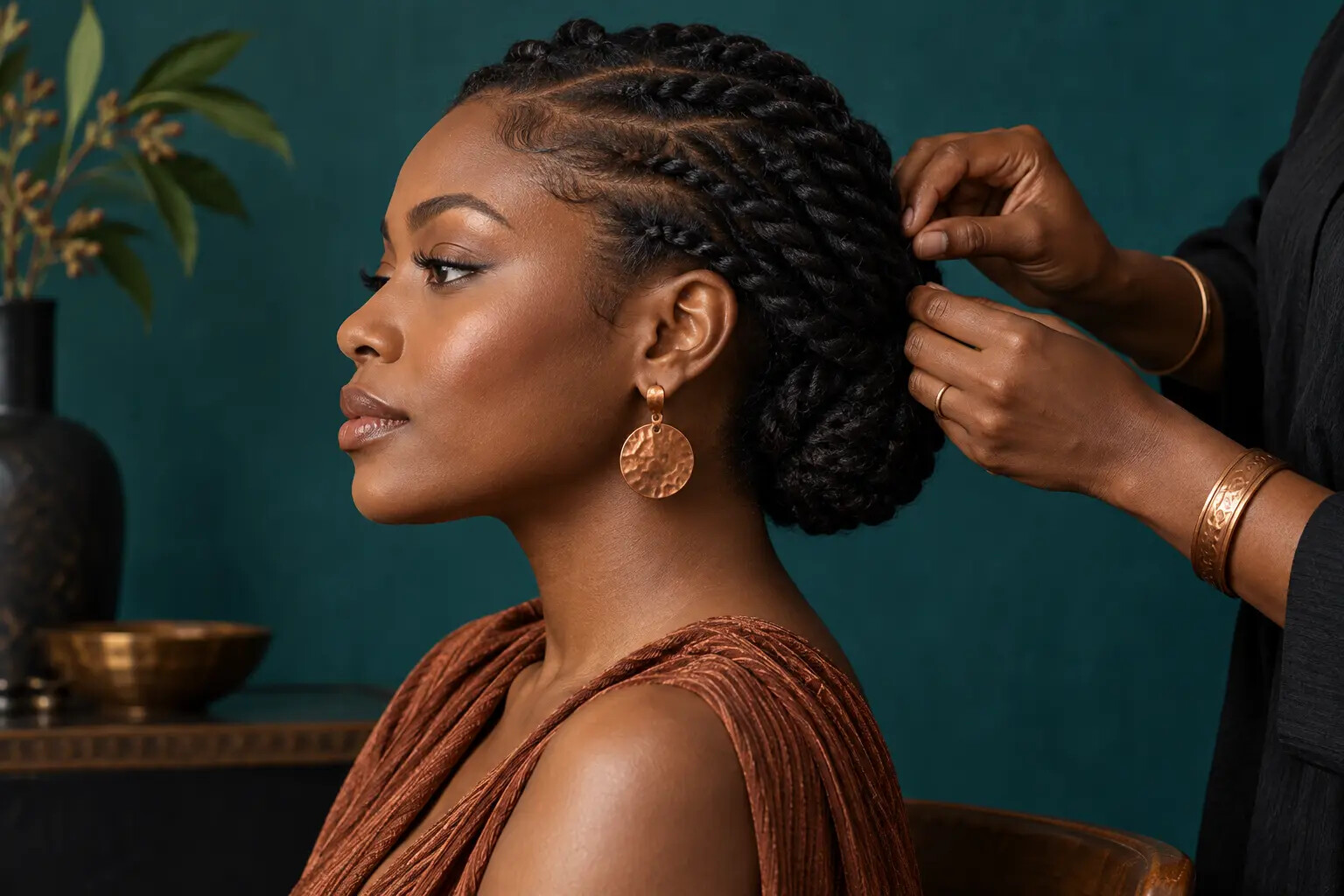
Braids, twists, wigs, weaves, and tucked styles are often called protective because they can reduce daily manipulation and shield ends. But no style protects by name alone. Excessive tension, heavy added hair, poor scalp access, and rushed removal can turn a low-maintenance style into a high-stress one.
Judge the style by what it does: Is it comfortable? Can you cleanse or access the scalp? Are the edges relaxed rather than pulled? Can you remove it without cutting or tearing your own strands?
Comfort is a design requirement
A new style should not require days of painkillers, sleeplessness, bumps, or a ‘settling’ period. Tell the stylist immediately if a section hurts. Loosening it is easier than repairing damage later. Be particularly cautious around the hairline, nape, and any area already thinning.
Weight matters too. Very long or dense added hair creates leverage at the roots. Lighter materials, larger sections, and shorter lengths can reduce the load without giving up the visual idea.
Maintain access and awareness
A style that hides the hair should not hide ongoing symptoms. Keep the scalp as clean and comfortable as practical. Avoid scratching with sharp objects. If you develop persistent itching, sores, tenderness, odor, or visible thinning, remove the style and seek appropriate help rather than covering the signal.
Do not keep a style solely to justify the money or time spent installing it. Protection stops when the body is asking for release.
Plan the exit before the install
Schedule enough removal time. Use good lighting, sections, and slip. Cut added hair only when you are certain where your own length ends. Detangle shed hair gradually before shampooing so it does not compact into larger knots.
After removal, choose a low-tension interval before the next long-wear style. The goal is not to keep hair hidden forever. The goal is to use styling as a tool without sacrificing comfort, edges, or scalp health.
Frequently asked questions
How do you know if a braid or twist style is too tight?
Pain, scalp soreness, headache, small red bumps around hair follicles, or a tight pulling sensation are clear warning signs of excessive tension that can lead to traction alopecia.
How long should a protective style be kept in?
Most protective styles (like braids or twists) should be kept for 4 to 8 weeks maximum. Leaving styles in longer risks severe matting, buildup, and localized breakage at the roots.
How do you care for your scalp while wearing braids or wigs?
Use a diluted scalp cleanser or witch hazel rinse on a cotton pad, hydrate the scalp lightly without heavy oiling, and ensure the hair is completely dry to prevent mold or bacterial growth.
Sources & further reading
Sources support the educational statements in this guide. Product and routine choices remain individual.
American Academy of Dermatology: Black hair—tips for everyday care American Academy of Dermatology: How to stop damaging your hairThis guide is educational and cannot diagnose hair or scalp conditions. Seek professional care for sudden or patchy loss, pain, sores, severe scaling, or persistent symptoms.