What to carry with you
- Melanin is a family of pigments, not a measure of human worth or ability.
- Specialized cells called melanocytes produce melanin and transfer it to surrounding cells.
- Pigmentation reflects many genes, biology, ancestry, and environmental influences.
Overview
Melanin is a complex family of naturally occurring biological pigments synthesized in melanocyte cells that determine human skin, hair, and eye coloration. Functionally, melanin acts as a natural broad-spectrum photoprotectant by absorbing ultraviolet (UV) radiation and neutralizing reactive oxygen species. Human pigment variation reflects evolutionary adaptation to regional UV exposure levels across geography, governed by complex multi-gene interactions rather than arbitrary racial classifications.
Start with the biology
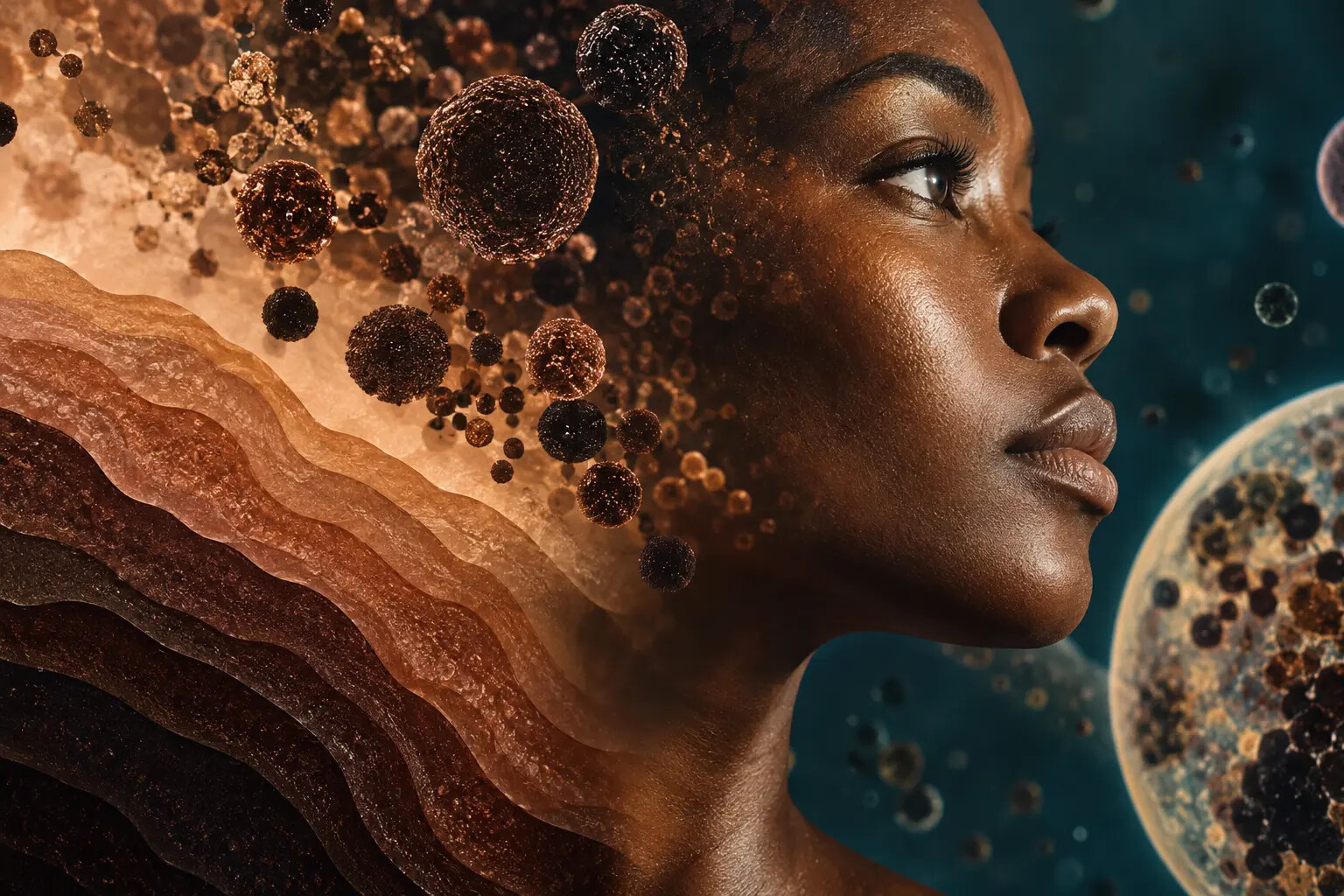
Melanin is the name for a family of naturally occurring pigments found across living organisms. In people, melanin contributes to the color of skin, hair, and eyes. It is produced inside specialized cells called melanocytes, within structures known as melanosomes. Those pigment-filled structures are then distributed to nearby cells, creating the visible range of human pigmentation.
Two major forms are commonly discussed in human pigmentation: eumelanin, usually associated with brown-to-black tones, and pheomelanin, associated with red-to-yellow tones. Most people have mixtures of pigment types and amounts. The result is not a set of neat boxes; it is a continuous, richly varied human spectrum.
Melanin and protection
Melanin can absorb and dissipate some ultraviolet radiation. That biological role helps explain why pigmentation evolved in relationship with geography and sunlight. But more melanin does not make anyone immune to sun damage, skin cancer, or other conditions. People of every skin tone benefit from sensible sun protection and from paying attention to changes in their skin.
A useful way to think about melanin is as one component of a larger protective system. Skin structure, behavior, environment, genetics, and health all matter. Respecting melanin means understanding what it does without turning it into a magical explanation for everything.
Why color varies
Human pigment variation is influenced by many genes and by how melanosomes are made, distributed, and maintained. The number of melanocytes is not the only factor. Their activity, pigment type, organelle size, and distribution also contribute. Hair can also change color across a lifetime as follicular pigment production shifts.
This complexity matters because simplistic statements about race and biology often outrun the evidence. Visible color is real; the social meanings attached to it are historically constructed. Science can describe pigment pathways, but it cannot justify a hierarchy of people.
What melanin does not prove
Melanin does not determine intelligence, morality, spiritual value, personality, or destiny. Claims that assign sweeping powers to pigment may sound affirming, but they replace one distortion with another. A stronger form of pride is evidence-aware: it celebrates beauty, ancestry, and identity without asking biology to carry claims it cannot support.
That distinction is central to Melaning. We make room for wonder while marking the boundary between metaphor, cultural meaning, and established science.
A better question to carry forward
Instead of asking whether melanin makes one group more or less human, ask how pigment biology reveals the adaptability shared by all humans. Study the mechanisms. Honor the histories. Protect the body you live in. Let accurate knowledge deepen dignity rather than flatten it.
Frequently asked questions
What is melanin and what is its main function?
Melanin is a biological pigment produced by melanocytes in melanosome organelles. Its primary function is photoprotection—absorbing and dissipating harmful UV radiation to protect cellular DNA.
What are the two main types of human melanin?
The two primary types are eumelanin (which produces dark brown and black tones) and pheomelanin (which produces red and yellowish tones). Human hair and skin color reflect the ratio and density of these two pigments.
Does having more melanin eliminate the need for sunscreen?
No. While higher eumelanin levels absorb a portion of UV radiation, melanin alone does not provide total immunity against sun damage, hyperpigmentation, or skin cancer. Dermatologists recommend sensible sun protection for all skin tones.
Sources & further reading
Sources support the educational statements in this guide. Product and routine choices remain individual.
NCBI Bookshelf: Biochemistry, Melanin PubMed: Comprehensive review of mammalian pigmentationThis guide is educational and cannot diagnose hair or scalp conditions. Seek professional care for sudden or patchy loss, pain, sores, severe scaling, or persistent symptoms.